



KDM4
KDM4 (lysine demethylase 4) is a family of Jumonji C-domain histone demethylases that remove methyl marks from histone lysine residues and thereby regulate chromatin structure and gene expression[1][2]. Through demethylation of transcriptionally relevant histone marks, KDM4 proteins participate in gene transcription, DNA repair, metabolism, cellular differentiation, proliferation, migration, and tissue development, linking epigenetic regulation to multiple biological processes[1][2][3]. Dysregulated KDM4 expression has been implicated in the establishment and progression of multiple diseases, particularly cancer, where genomic regions encoding KDM4A, KDM4B, and KDM4C are frequently amplified and associated with abnormal cellular proliferation and tumorigenesis[1][3]. Mechanistically, KDM4 family members function as Fe(II)- and 2-oxoglutarate-dependent oxygenases that regulate gene expression in a context-dependent manner through chromatin remodeling and interactions with signaling pathways[4]. Compared with related isoforms, KDM4A-C contain conserved JmjN, JmjC, PHD, and Tudor domains, whereas KDM4D lacks the PHD and Tudor domains, supporting functional distinctions despite shared catalytic activity[4][5]. KDM4A, KDM4B, KDM4C, and KDM4D exhibit overlapping but non-identical biological roles, and differences in expression patterns and regulatory interactions suggest isoform-specific functions in distinct cellular contexts[4][5]. For experimental applications, KDM4 enzymes are considered druggable epigenetic targets, and pharmacological inhibition of KDM4 activity has shown potential to suppress tumor progression in preclinical cancer models[1][3]. Recent efforts have therefore focused on pan-KDM4 inhibitors, including compounds targeting multiple KDM4 isoforms to address functional redundancy within the family and support translational cancer research[2][5].
References:
- [1]. Labbé RM, et al. Histone lysine demethylase (KDM) subfamily 4: structures, functions and therapeutic potential. Am J Transl Res. 2013 Dec 1;6(1):1-15. [Content Brief]
- [2]. Wu Q, et al. Recent Advances with KDM4 Inhibitors and Potential Applications. J Med Chem. 2022 Jul 28;65(14):9564-9579. [Content Brief]
- [3]. Yang G, et al. The emerging roles of lysine-specific demethylase 4A in cancer: Implications in tumorigenesis and therapeutic opportunities. Genes Dis. 2023 Mar 23;11(2):645-663. [Content Brief]
- [4]. Varghese B, et al. KDM4 Involvement in Breast Cancer and Possible Therapeutic Approaches. Front Oncol. 2021 Oct 28;11:750315. [Content Brief]
- [5]. Chandhasin C, et al. TACH101, a first-in-class pan-inhibitor of KDM4 histone demethylase. Anticancer Drugs. 2023 Nov 1;34(10):1122-1131. [Content Brief]
-
KDM4 Related Products (21)
Related Products (21)

- 1
- 2
-
IOX1
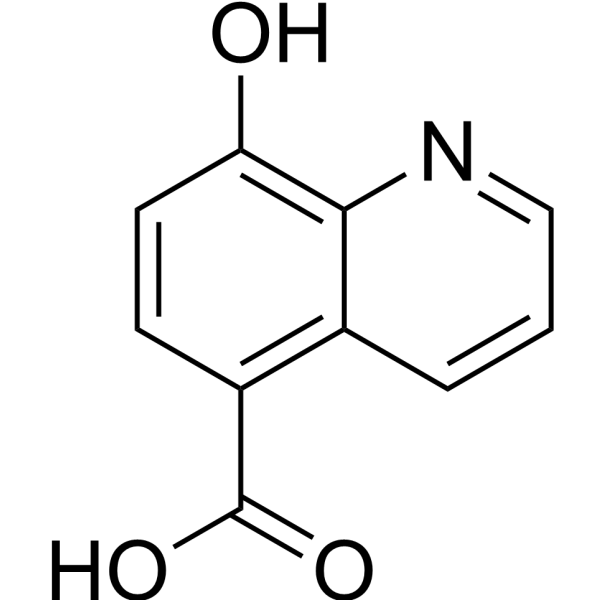 0 ImagesIOX1, a chemical probe, is a potent broad‐spectrum inhibitor of 2OG oxygenases, including the JmjC demethylases. IOX1 inhibits KDM4C, KDM4E, KDM2A, KDM3A and KDM6B with IC50 values of 0.6 μM, 2.3 μM, 1.8 μM, 0.1 μM and 1.4 μM, respectively. IOX1 also inhibits ALKBH5.
-
JIB-04
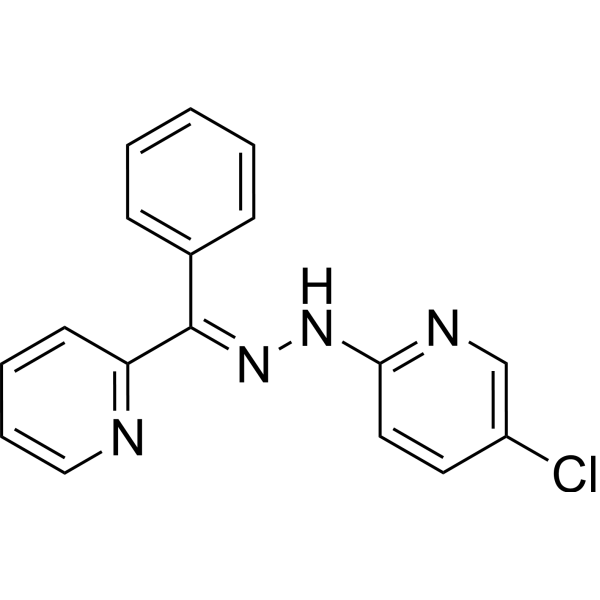 0 ImagesJIB-04 is a pan-selective Jumonji histone demethylase inihibitor with IC50s of 230, 340, 855, 445, 435, 1100, and 290 nM for JARID1A, JMJD2E, JMJD3, JMJD2A, JMJD2B, JMJD2C, and JMJD2D, respectively.
-
QC6352
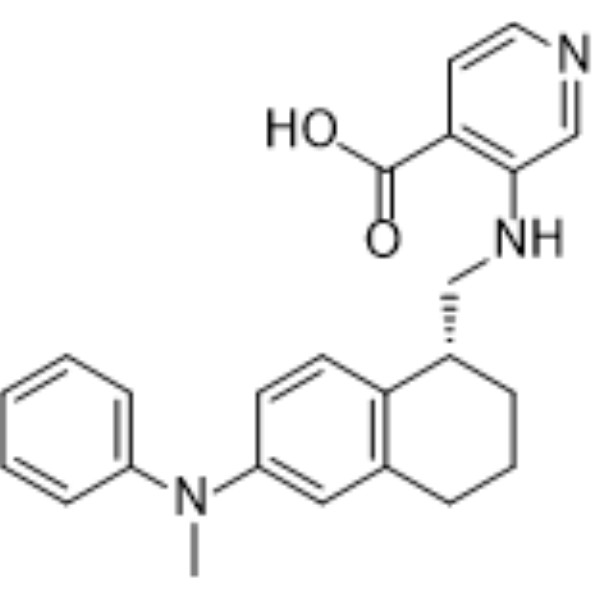 0 ImagesQC6352 is an orally active KDM4 inhibitor with anti-tumor and anti-proliferative activity. QC6352 has in vivo inhibitory effects on PDX models of breast and colon cancer and reduces the number of chemoresistant cell populations. QC6352 inhibits KDM4 different isoforms with IC50s of 104 nM (KDM4A), 56 nM (KDM4B), 35 nM (KDM4C), and 104 nM (KDM4D), respectively. QC6352 has moderate inhibitory activity against KDM5 with an IC50 of 750 nM (KDM5B).
-
ML324
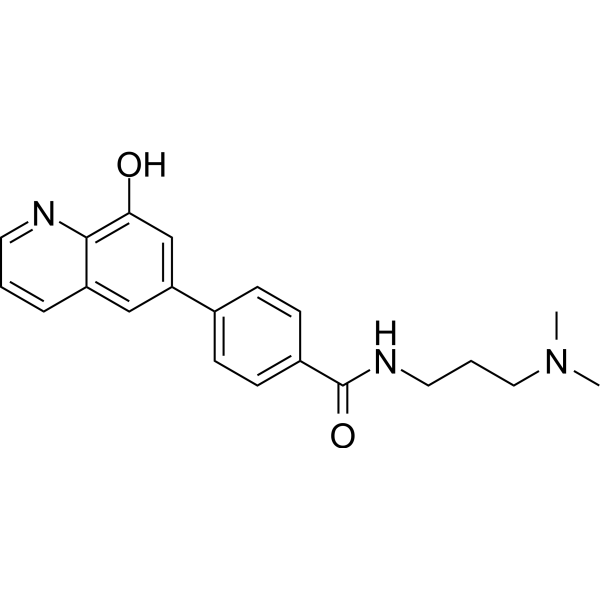 0 ImagesML324 is a potent JMJD2 demethylase inhibitor with antiviral activity. ML324 also exhibits inhibition for the histone demethylase KDM4B, with an IC50 of 4.9 μM. ML324 has potent anti-viral activity against both herpes simplex virus (HSV) and human cytomegalovirus (hCMV) infection via inhibition viral IE gene expression.
-
Zavondemstat
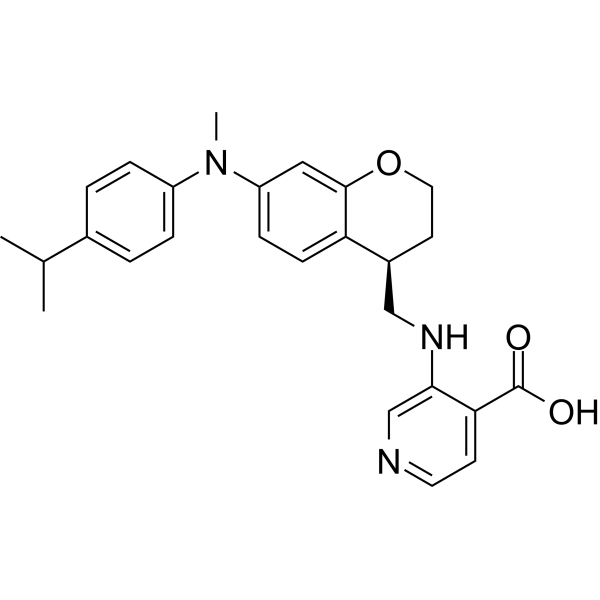 0 ImagesSynonyms: QC8222 free base; TACH 101 free baseZavondemstat (QC8222 free base; TACH 101 free base) is an orally active pan-KDM4 inhibitor, with a IC50 ≤ 0.08 μM against human KDM4A-D and a Kᵢ of 0.52 μM against human KDM4C. Zavondemstat induces cell apoptosis, causes S-phase cell cycle arrest, reduces the population of tumor-initiating cells and inhibits cancer cell proliferation. Zavondemstat suppresses tumor growth and induces tumor regression in mouse xenograft models. Zavondemstat can be used for the research of various cancers including colorectal cancer, esophageal squamous cell carcinoma and triple-negative breast cancer.
-
KDM5A-IN-2
 0 ImagesCat. No.: HY-125243CAS No.: 2281766-67-2KDM5A-IN-2 is a KDM5A inhibitor. The human IC50 values of KDM5A-IN-2 for KDM5A, KDM5B, and KDM4A are 0.11 μM, 0.22 μM, and 5.3 μM, respectively. KDM5A-IN-2 inhibits KDM5B- and KDM4A-mediated histone lysine demethylation.
-
DW-229
 0 ImagesCat. No.: HY-183618DW-229 is a PROTAC degrader derived from Deferiprone (HY-B0568), targeting Fe(II)/α‑ketoglutarate‑dependent histone lysine demethylases (KDMs). DW-229 degrades KDM2A, KDM3A, KDM5B, KDM4A‑C, KDM5C, KDM6B in breast cancer cells. DW-229 shows IC50 < 0.5 μM against MCF‑7 cells and IC50 of 8.87 μM against MDA‑MB‑231 cells, with high cancer cell selectivity. DW-229 can be used for the research of breast cancer, liver cancer, prostate cancer, lung cancer.
-
KDM2/7-IN-1
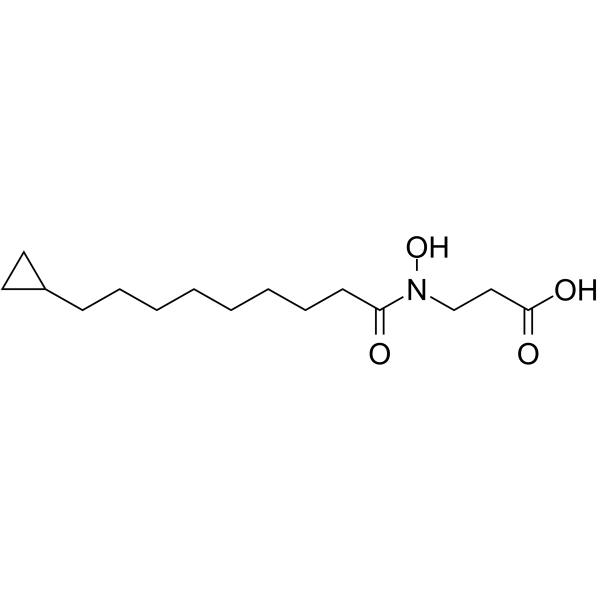 0 ImagesKDM2/7-IN-1 (TC-E 5002) is a selective histone demethylase KDM2/7 subfamily inhibitor (IC50 values are 0.2, 1.2, 6.8, 55, 83, >100 and >120 μM for KDM7A, KDM7B, KDM2A, KDM5A, KDM4C, KDM6A and KDM4A respectively). KDM2/7-IN-1 inhibits growth of HeLa and KYSE-150 cancer cells in vitro.
-
NCGC00244536
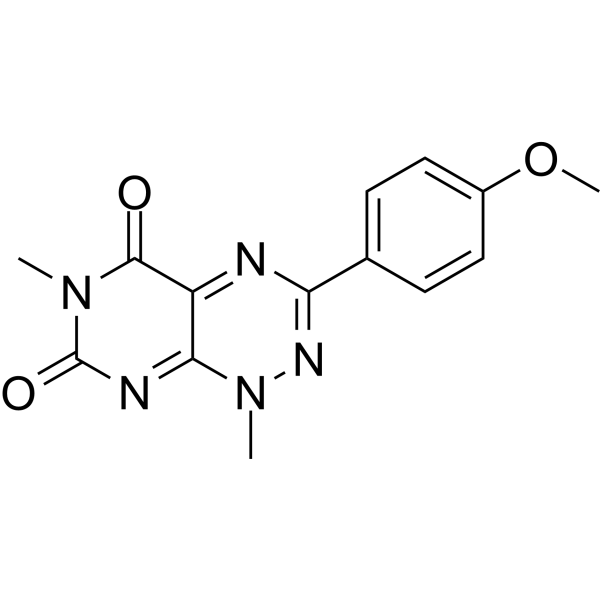
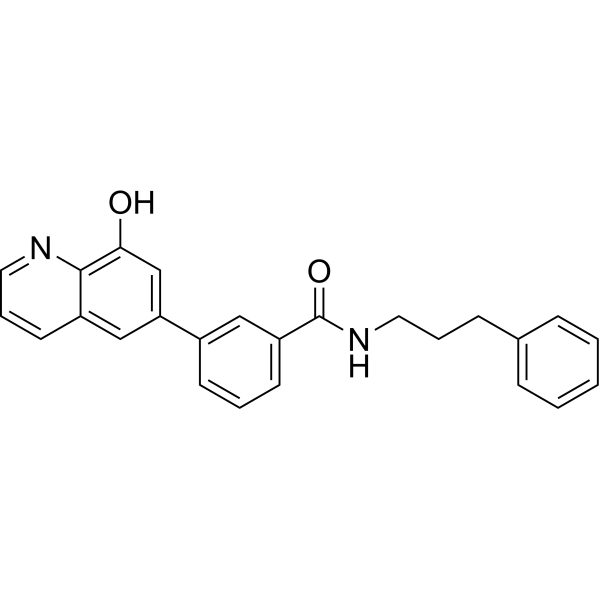 0 ImagesSynonyms: KDM4B Inhibitor B3NCGC00244536 is a potent KDM4B inhibitor with an IC50 of 10 nM.
-
NSC636819
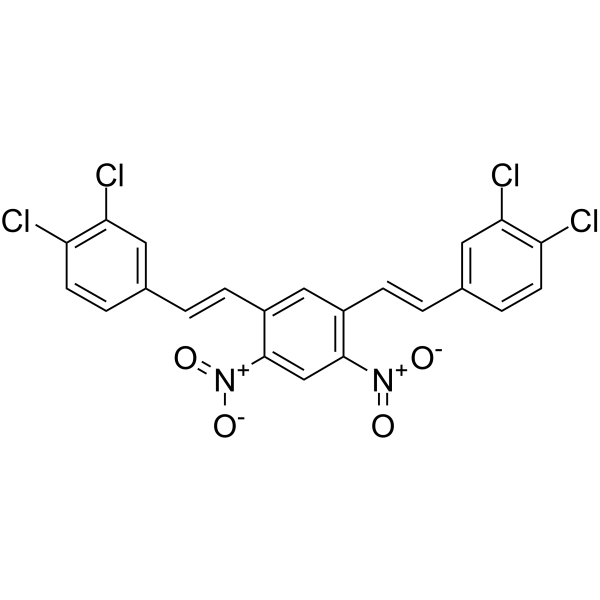 0 ImagesNSC636819 is a competitive and selective inhibitor of KDM4A/KDM4B. KDM4A/KDM4B are potential progression factors for prostate cancer. NSC636819 has the potential for the research of cancer diseases, especially prostate cancer.
-
KDM4D-IN-1
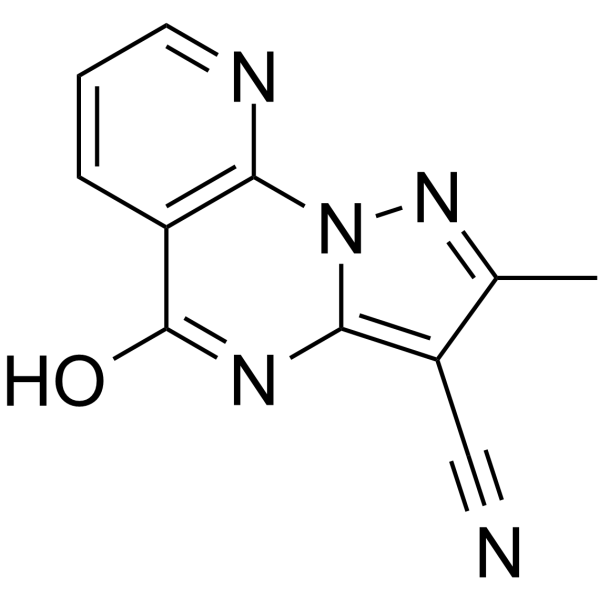 0 ImagesKDM4D-IN-1 is a new histone lysine demethylase 4D (KDM4D) inhibitor with an IC50 value of 0.41±0.03 μM.
-
KDM4-IN-3
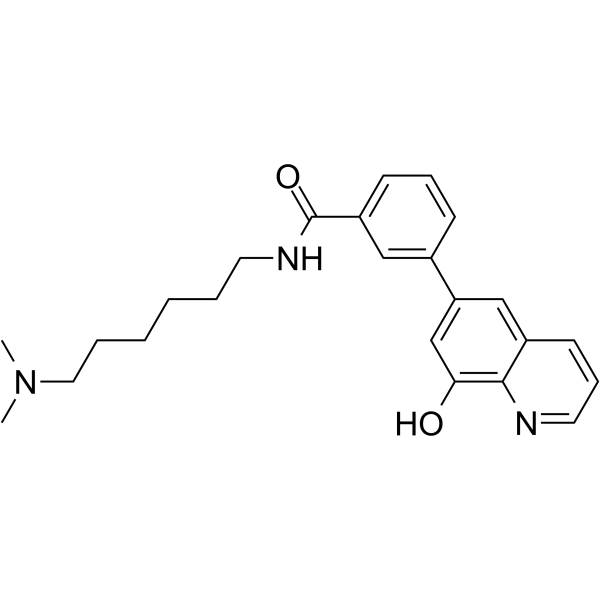
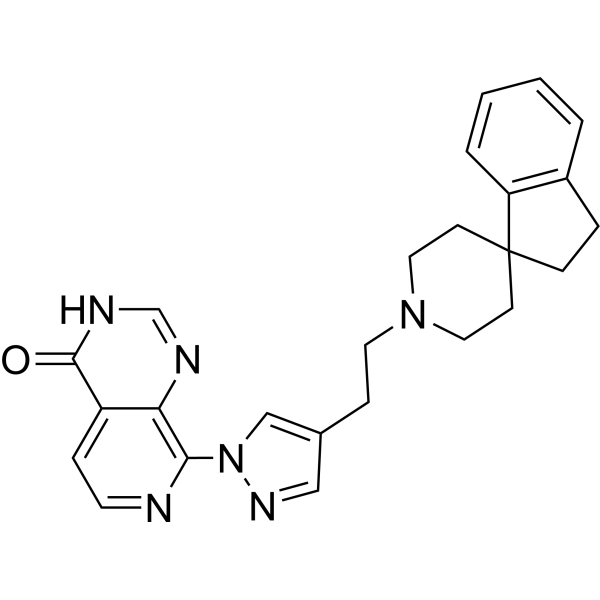
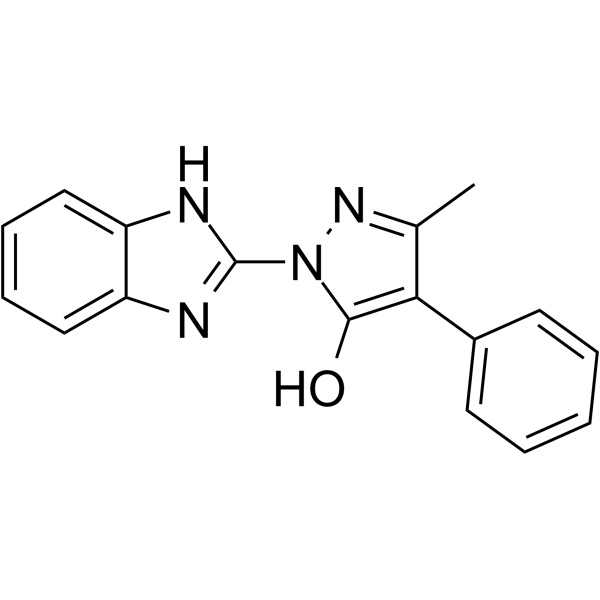 0 ImagesKDM4-IN-3 (Compound 15) is a KDM4 inhibitor (IC50 = 871 nM) that exhibits improved potency in biochemical assays. KDM4-IN-3 is cell-permeable and kills prostate cancer cells at low micro molar concentrations. KDM4-IN-3 inhibits growth of prostate cancer cell lines and increases the H3K9me3 abundance. KDM4-IN-3 can be studied in research for prostate cancer.
-
NCDM-32B
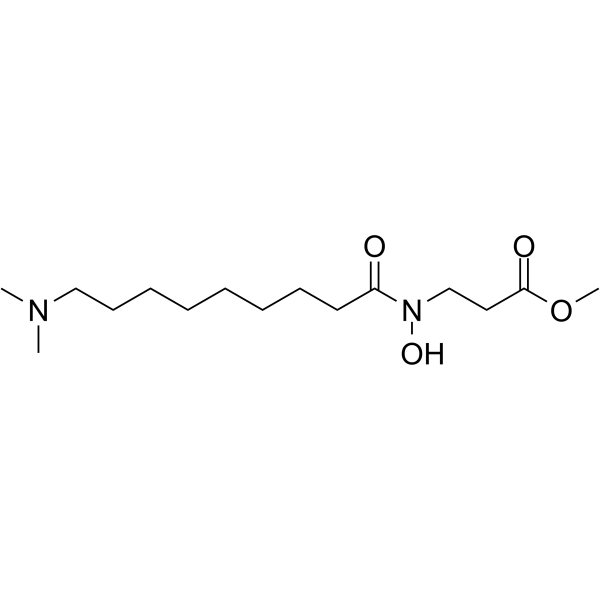 0 ImagesCat. No.: HY-120766CAS No.: 1239468-48-4NCDM-32B is a potent and selective KDM4 inhibitor, with IC50 values of 3.0 μM for KDM4A and 1.0 μM for KDM4C in in vitro enzyme assays. NCDM-32B specifically increases global H3K9me3/me2 levels in basal breast cancer cells. NCDM-32B impairs the viability of KDM4C-amplified basal breast cancer cell lines (HCC1954 and Colo824). NCDM-32B can be used for the study of breast cancer.
-
PROTAC KDM4 degrader-1
 0 ImagesPROTAC KDM4 degrader-1 is a KDM4 PROTAC degrader that degrades KDM4A-C with DC50 values of 37.53, 39.93, and 49.41 nM, respectively, while sparing KDM4D. PROTAC KDM4 degrader-1 induces cell cycle arrest, apoptosis and antiproliferative activity in esophageal cancer cells. PROTAC KDM4 degrader-1 can be used for the research of esophageal cancer.
-
KDM4-IN-4
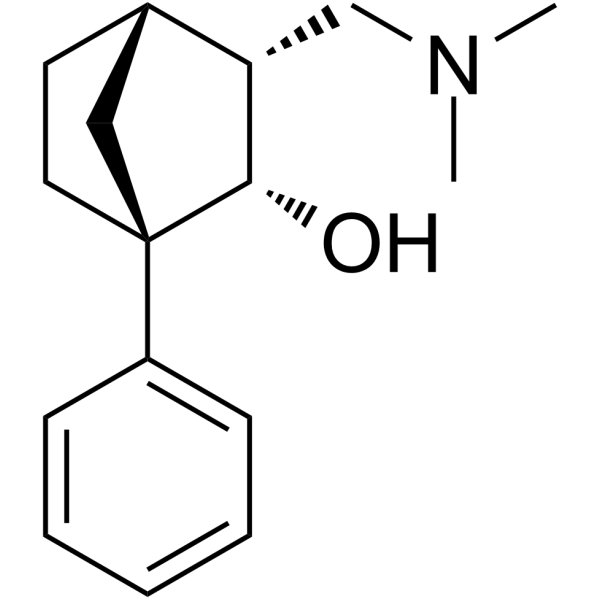 0 ImagesCat. No.: HY-150619CAS No.: 2230475-63-3KDM4-IN-4 (compound 47) is a potent histone lysine demethylase 4 (KDM4) inhibitor with a modest affinity binding to ~80 μM for KDM4A-Tudor domain. KDM4-IN-4 can inhibit H3K4Me3 binding to the Tudor domain in cells with an EC50 value of 105 μM. KDM4-IN-4 can be used for researching anticancer.

-
KDM4C-IN-2
 0 ImagesCat. No.: HY-116796CAS No.: 23705-85-3
- 1
- 2



